
LP SmartSide siding,the cedar look, engineered to last.
SmartSide is engineered wood. Treated strands are pressed into boards that carry the look of cedar without cedar's appetite for rot. The boards hold paint for years, and the material runs 15 to 25 percent less than fiber cement.
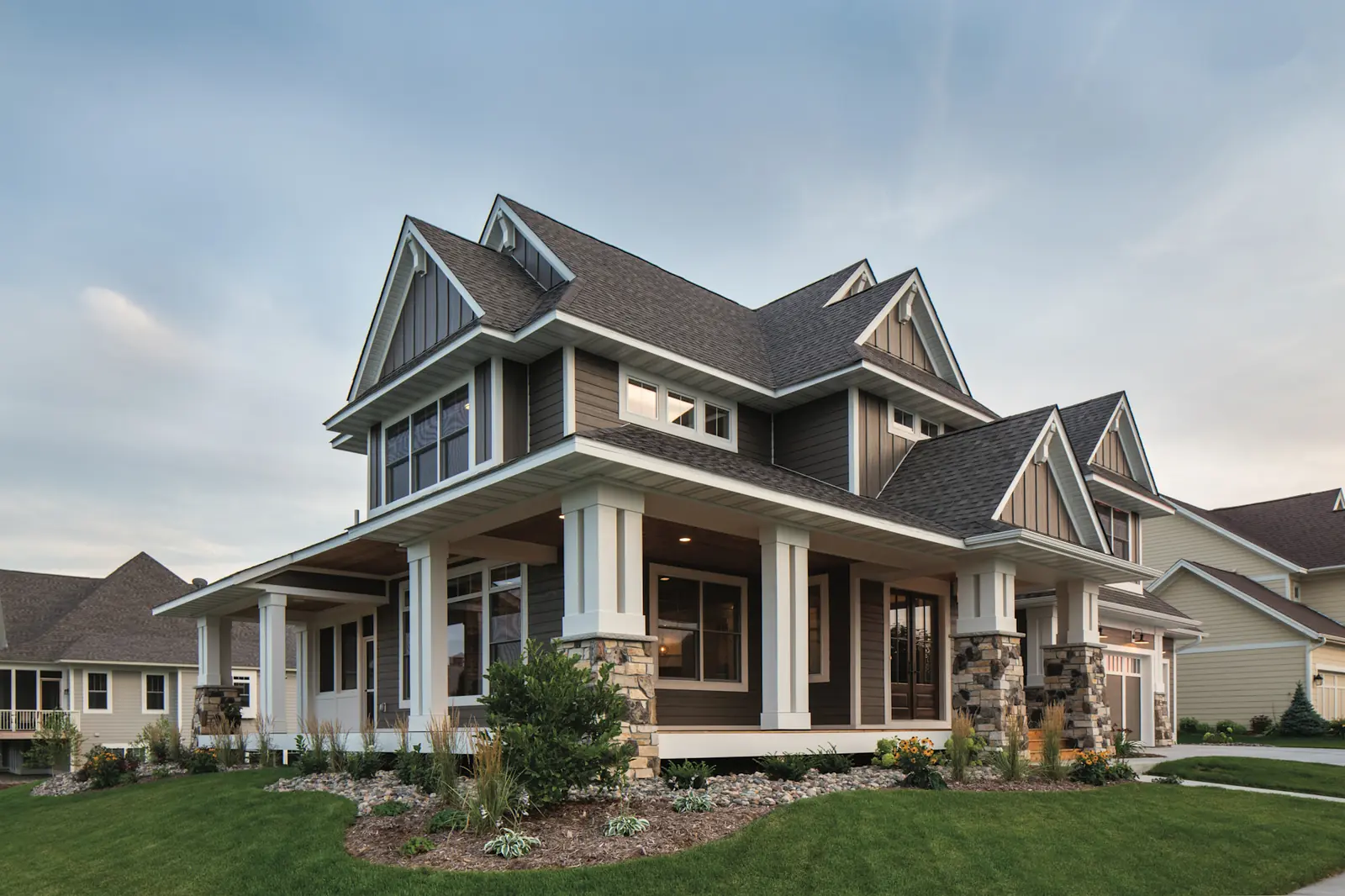 Photo: LP Building Solutions
The short answer
Is LP SmartSide a good choice for Omaha?
It is when you want a wood look at a price between vinyl and fiber cement. The zinc borate treatment runs through the full board rather than sitting on the face, so every cut edge is already protected, and cut edges are exactly where solid cedar fails first. The boards stay flat through our humidity and temperature swings. The trade-off to know about is hail. Stones above an inch can mark the surface or break the paint film, so in the hardest-hit corridors James Hardie fiber cement is the more durable wall. For everything else, SmartSide is a real step up from vinyl.
How it compares
SmartSide vs Hardie vs vinyl
| LP SmartSide | James Hardie | Vinyl | |
|---|---|---|---|
| Material | Treated engineered wood | Fiber cement | Hollow-back PVC |
| Hail | Handles small stones, marks above 1 inch | Marks, resists cracking | Cracks and shatters |
| Finish | Repaint every 10-15 yrs, or ExpertFinish factory paint | ColorPlus baked-on finish | No painting, fades over time |
| Weight on the wall | Light, easier to hang | Heavier, more labor | Lightest |
| Warranty | 5-yr full, prorated to 50 | 30-yr non-prorated | Varies by product |
The material
Protected all the way through.
The wood strands get their zinc borate treatment during manufacturing, before the board is ever pressed, so the protection runs through the full thickness instead of sitting on the surface. Every board we cut on the wall exposes end grain, and end grain is where solid cedar starts to rot. With SmartSide, that cut edge is already treated. The engineered construction also moves far less than solid wood, so the boards stay flat and the seams stay tight through the seasons.
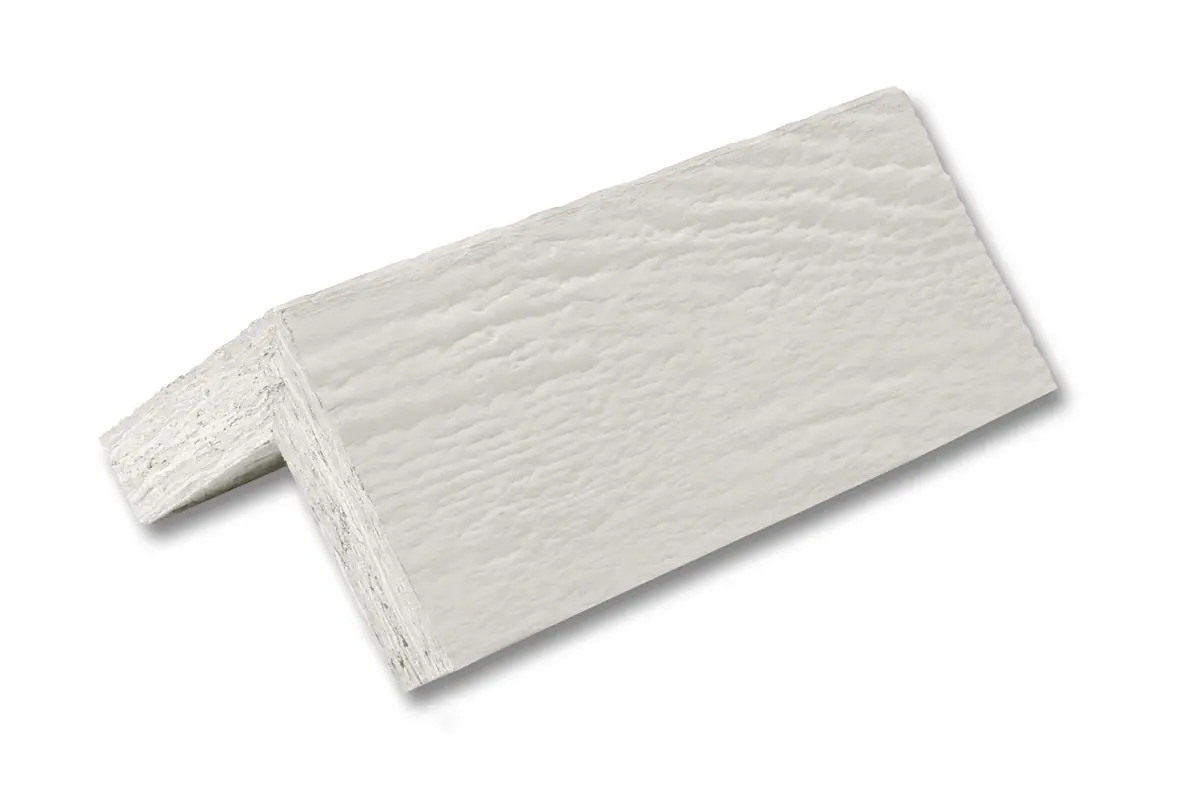 Photo: LP Building Solutions
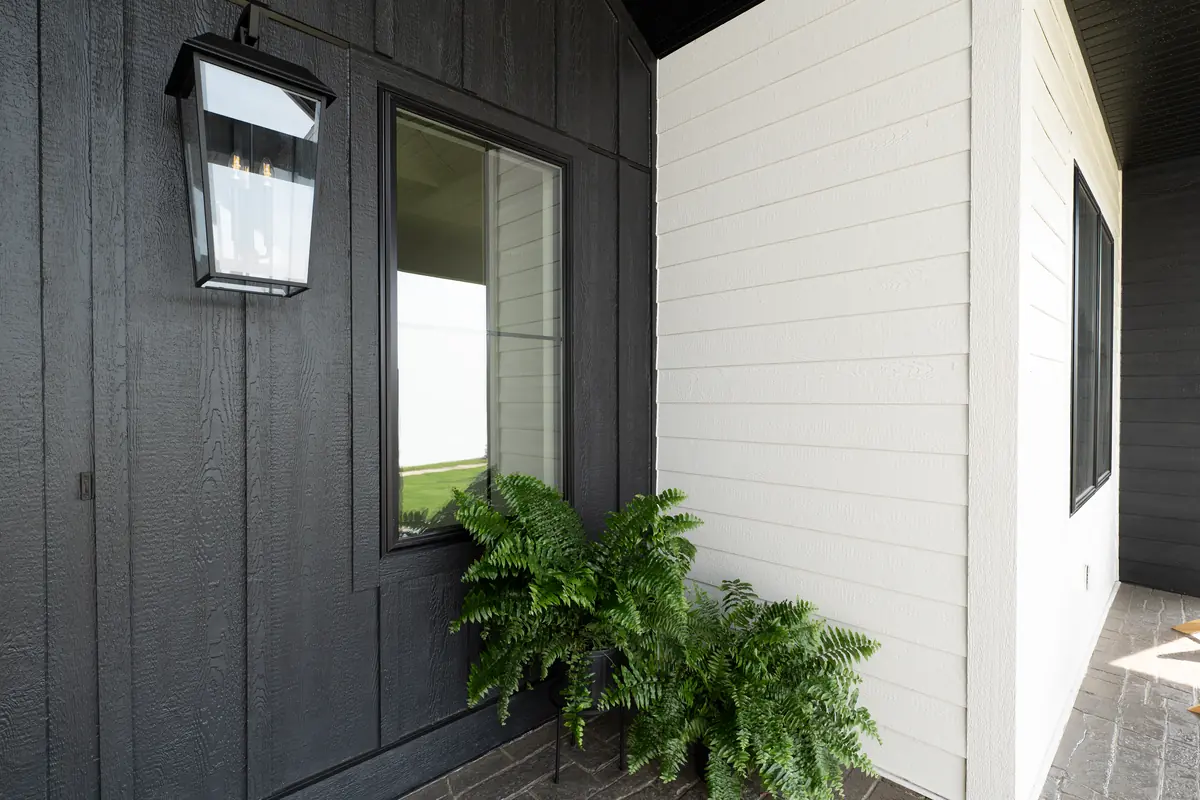 Photo: LP Building Solutions
The lineup
Lap, panel, trim, and soffit.
Lap siding comes in 6, 8, and 12-inch widths with a smooth or cedar-grain face, in lengths up to 16 feet so long walls carry fewer seams. Panel siding comes in 4x8 and 4x9 sheets with groove patterns for board-and-batten looks, which is why you see it on gable ends and accent walls. LP SmartTrim wraps corners, windows, and fascia in widths from 3.5 to 11.25 inches, and matching soffit carries the eave ventilation, so the whole exterior comes from one system and one color match.
The finish
Primed or factory-finished.
Factory-primed boards need their topcoat within 180 days of installation, so field painting is part of that scope from day one. ExpertFinish boards arrive with factory-applied paint and a 15-year finish warranty, which takes the painters off the schedule entirely. Either way, we prime and paint every cut edge before the weather sees it, because that is what LP's warranty and the board itself both ask for. Plan on a repaint every 10 to 15 years depending on exposure.
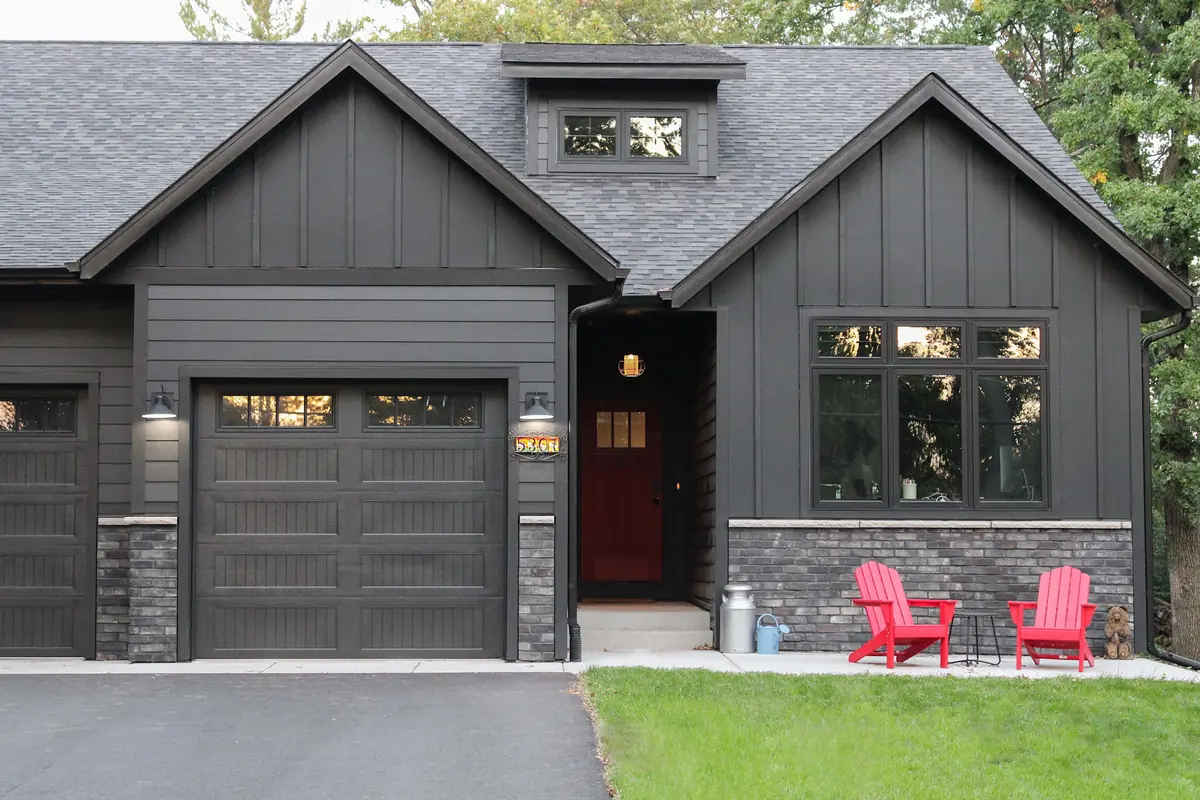 Photo: LP Building Solutions
How we do it
The install decides how long it lasts
SmartSide is a forgiving board with an unforgiving spec sheet. LP publishes exact requirements for fastening, gaps, and flashing, and warranty coverage depends on following them, so that is where we spend the time.
Start clean
LP recommends tearing off the old siding rather than covering it. We strip the wall, inspect the sheathing, repair any damage, and hang a weather barrier before the first board goes up.
Fasten to the spec
Nails land in the nailing zone at every stud, set flush and never overdriven, with a minimum 1.25-inch lap and the expansion gaps LP calls for at corners and trim.
Flash every opening
Head flashing over windows and doors, kickout flashing where siding meets roof, and the required clearances off roofing and grade so water never wicks into a board edge.
Who's behind it
Built on a craftsman's standard.
Tailwind Roofing is a new company built on David Nelan's 25+ years in the trades, two decades of it building and finishing exteriors across the Omaha metro, backed by a Class B contractor's license. Every job is held to the standard he has worked to since 2003, from the first assessment to the final walkthrough.
Questions
Common questions about LP SmartSide
How does LP SmartSide compare to James Hardie fiber cement?
SmartSide is engineered wood and Hardie is fiber cement, and both resist rot and insects. Hardie takes hail and fire better and carries a 30-year non-prorated warranty, where LP carries a 5-year full replacement warranty plus prorated coverage to 50 years. SmartSide runs 15 to 25 percent less on material, and it weighs less on the wall with a truer wood grain. We install both and walk you through both, then you decide which fits the house and the budget.
Does LP SmartSide hold up to Nebraska weather?
It holds up well when it goes on to LP's spec. The zinc borate treatment runs through the full board, so moisture and fungal decay do not get a foothold even on north walls that stay damp. The boards move very little through our swing from below zero to the upper 90s, about on par with fiber cement. The limit to know about is hail. Stones above an inch can dent the surface or break the paint film, so in the hardest-hit corridors fiber cement is the more durable wall.
Does LP SmartSide need to be painted?
Yes, at some point. Factory-primed boards need their topcoat within 180 days of installation, and pre-finished ExpertFinish boards arrive with factory paint and a 15-year finish warranty, so no field painting is needed at the start. Either way, every cut edge gets primed and painted during installation, and you should plan on a repaint every 10 to 15 years depending on exposure and paint quality.
Is LP SmartSide better than vinyl siding?
It costs more than vinyl and gives you more back. SmartSide takes impacts that crack vinyl, and it carries a real wood grain that vinyl only imitates. Vinyl never needs paint, and that is its one lasting advantage, because SmartSide asks for a repaint every 10 to 15 years. Homeowners replacing worn vinyl choose SmartSide when they want a real durability step up without paying fiber cement prices.
What warranty does LP SmartSide carry?
A 5-year 100 percent replacement warranty, plus prorated coverage against manufacturing defects out to 50 years. ExpertFinish pre-finished boards add a 15-year finish warranty against peeling, cracking, or flaking. The coverage depends on registration and on installation to LP's spec, which is one more reason the install matters. Hail and normal weathering fall under homeowners insurance rather than the product warranty.
Thinking about SmartSide?
We'll look at your house, walk SmartSide against the other materials with you, and give you a detailed estimate.
Comparing materials? See James Hardie fiber cement, vinyl siding, or all siding options.