How a roof job actually goes.
What happens during a residential roof replacement in Omaha, from the first call through the final walkthrough. Here's how the work usually unfolds.
Step one
First contact and inspection
Most projects start with a phone call or online scheduling. We'll ask about your property, how old the roof is, and what's going on, whether that's storm damage, an aging roof, or a leak. For most metro locations we get an inspection on the calendar within days.
On-site, we get on the roof to check shingle condition, flashing, ventilation, and deck integrity where it's visible, and we photograph everything we find. We measure the roof so the material estimate is accurate, and we check the attic when we can get to it to assess ventilation and spot any deck issues from inside.
Insurance claims run a little differently. The inspection focuses on documenting impact damage with measurements and detailed photos for the adjuster, and we handle the supplement process if coverage gaps turn up after the first adjuster visit.
Step two
Estimate and material selection
The estimate breaks down square footage, material options, labor, and timeline, and the price covers tear-off, disposal, materials, installation, and cleanup. We present options across shingle brands and impact ratings: GAF, Owens Corning, and CertainTeed, with Class 3 or Class 4 ratings.
Product choice affects what you pay up front and what insurance gives back over time. Class 4 impact-rated shingles cost more initially but qualify for insurance premium discounts that usually pay back the difference within five to ten years. Once you've picked a line, we go through colors with samples held against your house, and we add ventilation or gutter work where it's needed.
The estimate stays valid for a reasonable window, so you can compare options and check your insurance coverage. Take your time deciding. We schedule the work when you're ready to proceed.
Step three
Scheduling and preparation
Once the contract is signed and materials are selected, the project enters the scheduling queue. Lead time varies by season: spring and summer back up after big storms, while fall and winter usually move faster. We confirm a specific start date once materials are ordered and crew availability is locked.
The dumpster arrives the day before or the morning of tear-off, positioned in the driveway so debris goes straight off the roof into it. We'll ask you to move vehicles, patio furniture, and fragile items away from the perimeter, and garage access may be limited during active work.
Crew size depends on the roof, usually three to six people. Most residential replacements in Elkhorn, Papillion, and the surrounding areas wrap in a day or two, barring weather or unexpected deck issues.
Step four
The day of work
Tear-off
The crew shows up early and tarps go down around the house to catch debris. Tear-off starts at the peak and works across the roof, pulling the old shingles, underlayment, and any damaged decking. Debris goes straight into the dumpster, and we clean as we go so nothing piles up around the property.
Deck repair
With the deck exposed, we check for soft spots, rot, or damage that wasn’t visible from below. Anything we find gets photographed, and we talk it through with you before any repair proceeds. Most of the cost is known from the inspection, but tear-off occasionally turns up hidden damage that we replace section by section.
Installation
Underlayment goes down first, then ice-and-water shield at the eaves and valleys, then starter strips at the edges. Shingles run in courses from the eaves up with proper overlap and nailing, and ridge vents, hip caps, and flashing go in at every penetration. Valleys get extra attention since that’s where water concentrates.
Cleanup
Daily cleanup includes a magnet sweep of the yard and driveway for nails and metal. Tarps come up and debris is collected, then a final walk catches anything missed. Dumpster pickup is scheduled within a few days of completion.
Step five
Final walkthrough and completion
Before the crew leaves, we walk the finished work with you from ground level, which is enough to check the quality of the job. Anything you're unsure about gets addressed on the spot. You get warranty documentation along with the material labels for your records.
Payment is typically a deposit at contract signing and the balance at completion. On insurance claims, we coordinate directly with your carrier from inspection through the final invoice so the paperwork lines up with the work.
We register the manufacturer warranty when applicable. GAF, Owens Corning, CertainTeed, and others require registration within 60 days for full coverage, and you receive confirmation to keep with your property records.
What moves the schedule
What affects the timeline
Weather
Rain stops work right away; we don’t install on wet decking. High wind shuts things down for safety, summer heat slows the crew, and cold below the shingle manufacturer’s minimum install temperature ends the day. Spring and fall are the unpredictable seasons, so we build flexibility into the schedule.
Roof complexity
Simple gable roofs move faster than multi-level or hip designs. Valleys, dormers, skylights, and chimneys add time, and steep pitch slows work and calls for extra safety measures. Older homes tend to be more intricate, so the age of the house usually tracks with complexity.
Deck condition
Unexpected deck damage extends the timeline when replacement plywood is needed. Ice-dam damage near the eaves is a common find during tear-off, and inadequate ventilation can deteriorate decking from underneath. Most inspections catch the obvious issues, but some only show up once the shingles are off.
Material availability
Popular colors and products stock readily at local distributors. Specialty items or less common manufacturers may need ordering with lead time, and a big storm can create shortages when several neighborhoods replace at once.
What it's like at home
What you'll notice during the work
Tear-off is loud: scraping and the impact of old material hitting the dumpster. Installation is quieter, but the nail guns keep a steady rhythm. Most homeowners either head out for the day or settle in inside.
You'll feel some vibration through the house during tear-off and nailing. Pictures may need straightening and items on shelves can shift a little. Dust is minimal, though some attic dust can settle inside from the vibration, and your HVAC can pull in a bit of debris, so an air-filter change after completion is a good idea.
The crew takes up driveway and street space, and the dumpster and material staging affect how traffic flows around the house. Neighbors will notice the activity. It's a normal part of residential work in Millard, Bellevue, and around Omaha.
From the job site
Start to finish
Every roof replacement follows the same careful process. Here's what it looks like along the way.
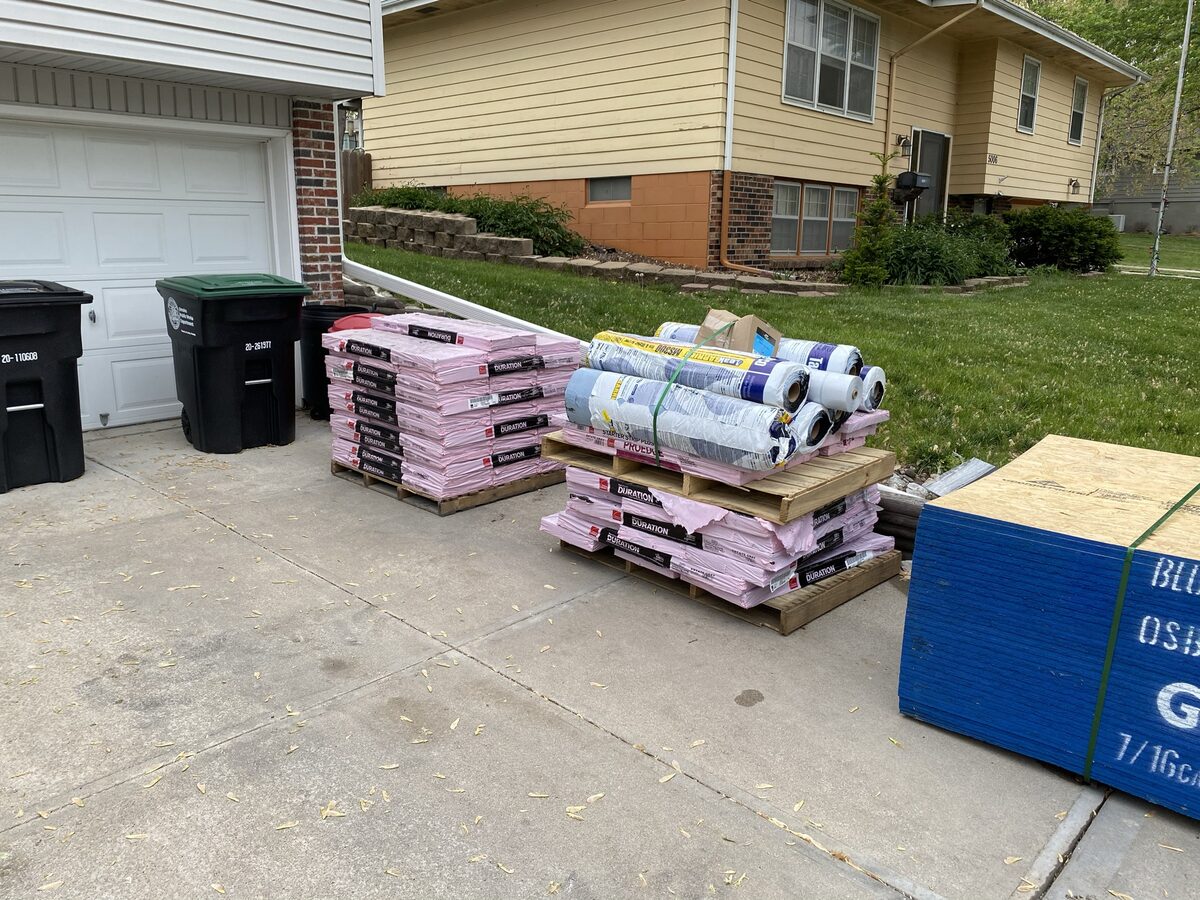
Materials staged and ready for installation
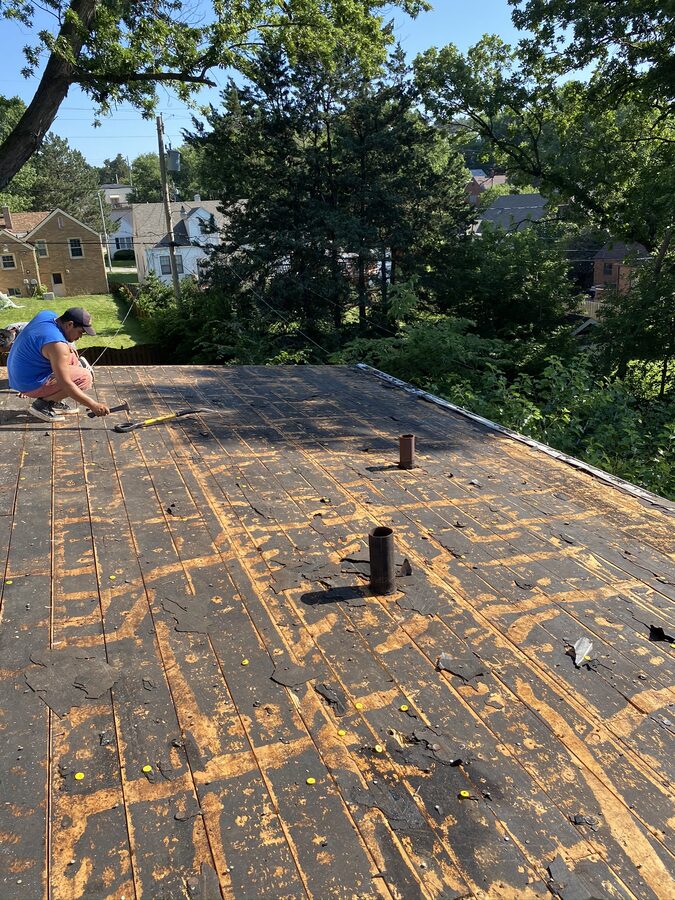
Tear-off complete, deck exposed and ready for inspection
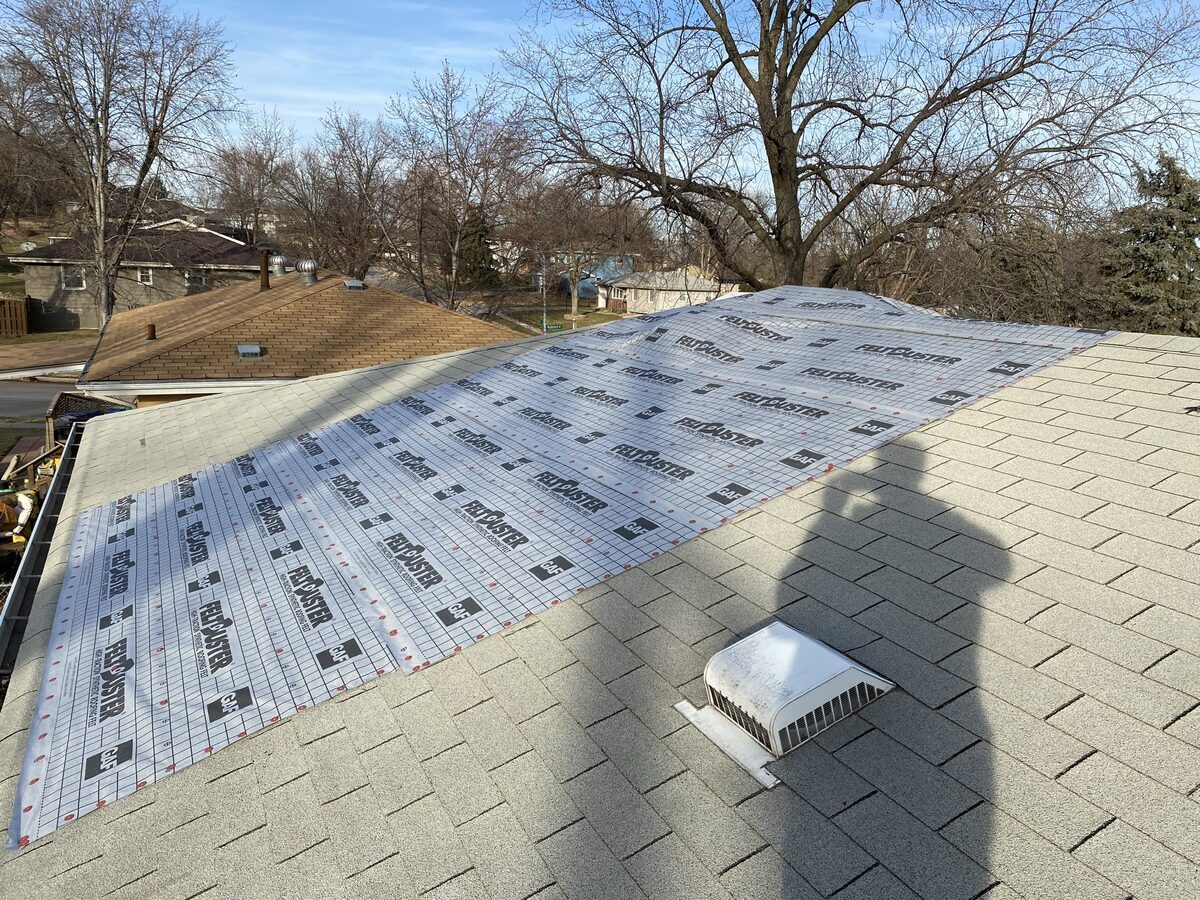
Dry-in to protect the exposed decking
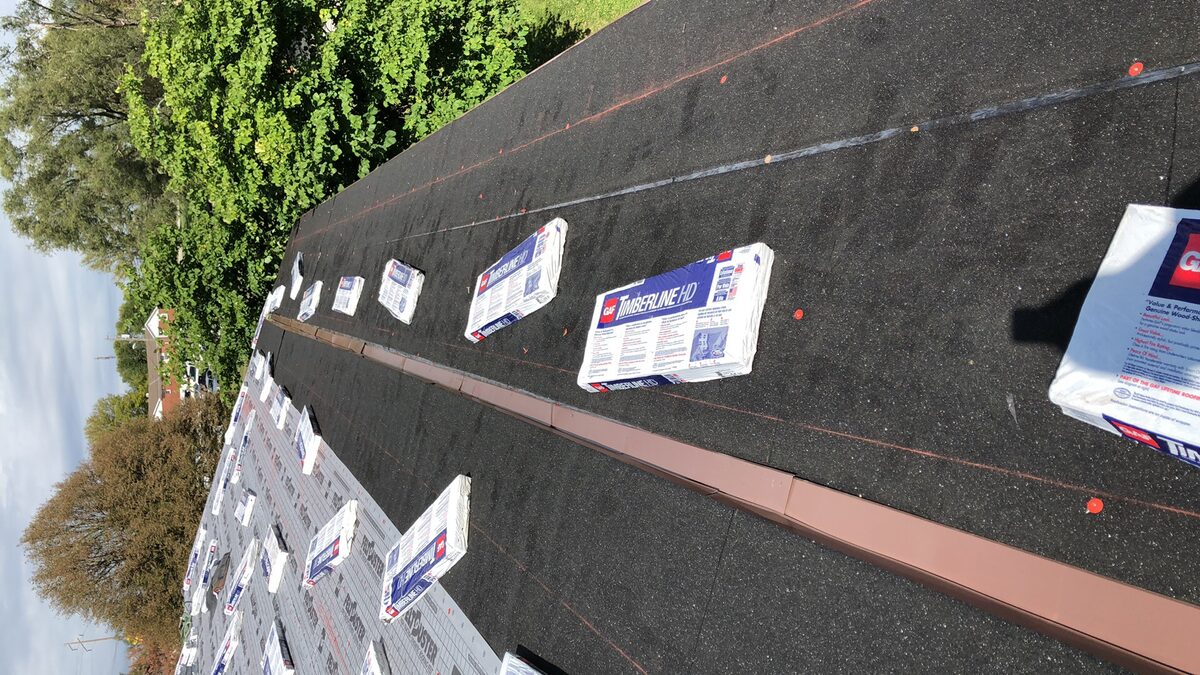
Shingle bundles staged on the roof for installation
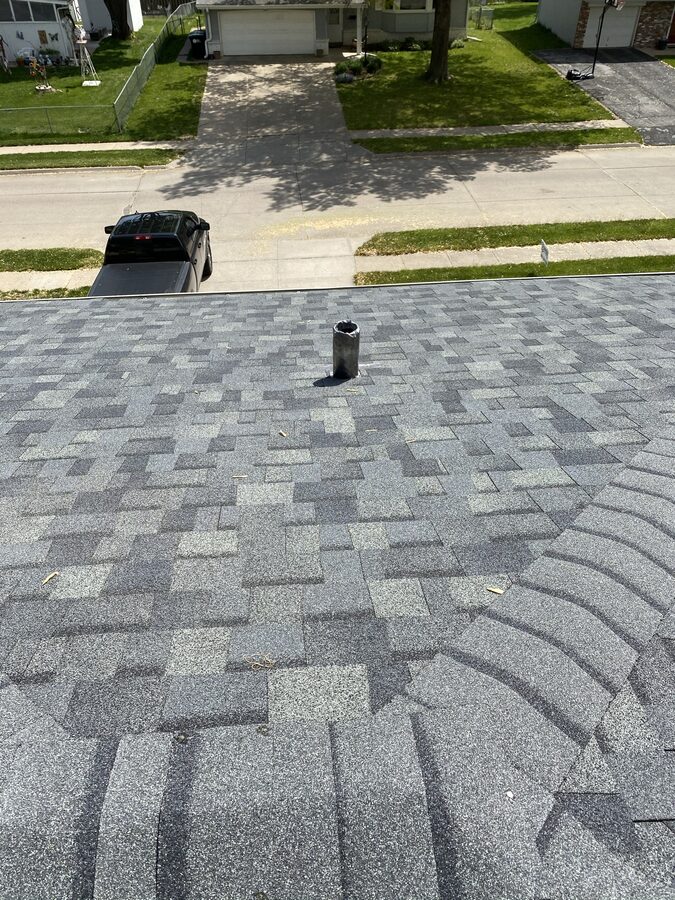
Installation complete with clean lines and proper overlap
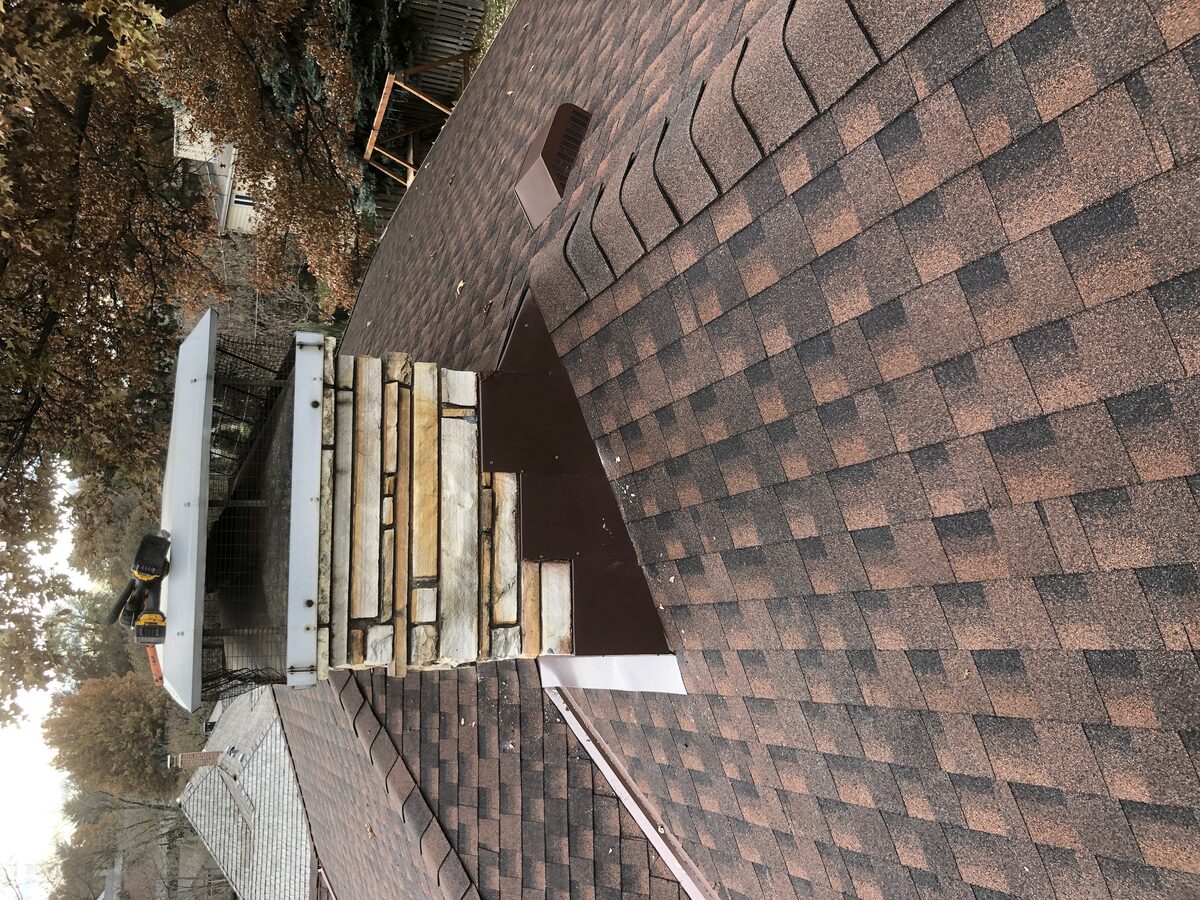
Flashing installed around roof penetrations
Ready to start your project?
Book an inspection and we'll talk through your specific roof and what to expect on timeline.
Email: info@tailwindroofing.com